
We’ve rounded up the top YouTube cameras for every type of creator — whether you film indoors, travel constantly, or love sharing action-packed adventures.
Whenever you buy through the links on our site, we may receive a small affiliate commission. Here’s what that means for you: nothing changes in terms of price, but it helps support our work.
Choosing the right camera depends entirely on the kind of content you want to make and the tone of your channel. Every camera on this list can be a great fit for someone — and a poor fit for someone else. To cover as many creators as possible, we’ve included everything from pocket-friendly vlogging models and mirrorless hybrids to action cams and 360-degree systems.
Every camera featured here has been thoroughly tested by me or another member of the DCW team. You can jump into each individual review for in-depth impressions and sample footage. If you’re new to video production, I’ve added some beginner-friendly tips at the bottom of the page to help you choose the right setup.
This guide focuses specifically on cameras, not phones (we have a separate list dedicated entirely to the best smartphones for video). I’ve also made sure to include budget options, because you don’t need to spend a fortune to get a YouTube-ready camera.
Let’s dive into the top picks.
Best Cameras for YouTube
Why trust Uniquez.shop?
Our team spends countless hours putting cameras and gear through real-world testing, so you can confidently choose the right tool for your needs.
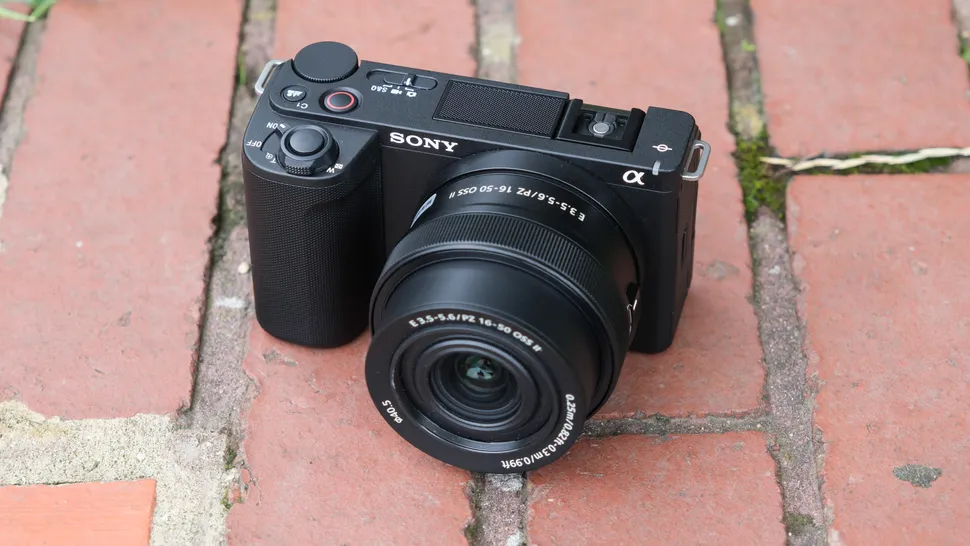
1. Sony ZV-E10 II (Best for vloggers)
The best Sony camera for vloggers and creators
Specifications
• Sensor: APS-C
• Resolution: 24.2MP
• Mount: Sony E
• Screen: Vari-angle touchscreen
• Viewfinder: None
• Burst rate: 11fps (up to 116 JPEGs)
• Max video: 4K
Reasons to buy
- Excellent 4K quality with minimal crop
- Surprisingly good built-in microphone
- Much better battery life than the original
- Strong live-streaming improvements
Reasons to skip
– No AI processor, so subject tracking is basic
– Lacks auto-framing features found on other Sony bodies
– Very small body struggles with larger lenses
– No in-body stabilization
Buy it if:
✅ You want the flexibility of interchangeable lenses — unlike Sony’s fixed-lens ZV models, this one supports the full E-mount ecosystem.
✅ You want great on-camera audio without needing an external mic.
Don’t buy it if:
❌ You want something extremely simple — devices like the DJI Pocket 3 are easier for absolute beginners.
❌ You want an even balance of photos and video — Sony’s a6xxx series or the A6700 are better hybrid choices.
The ZV-E10 II is built specifically with YouTubers and vloggers in mind. It’s a clear step up from the first generation, with cleaner 4K footage, revamped menus, and an easier touch-driven interface. The upgraded microphone (plus the included wind muff) produces impressive audio, making this a solid option for lightweight setups.
It isn’t designed for photography enthusiasts — the lack of an EVF and minimal photo-focused controls make that clear — but it still uses the same sensor and processor as the A6700, so the image quality is respectable. Its tiny, lightweight body works best with compact lenses, though the full E-mount lineup gives you tons of creative options.
The absence of IBIS is the biggest drawback, but considering the price and features, it’s one of the best value vlogging cameras available.
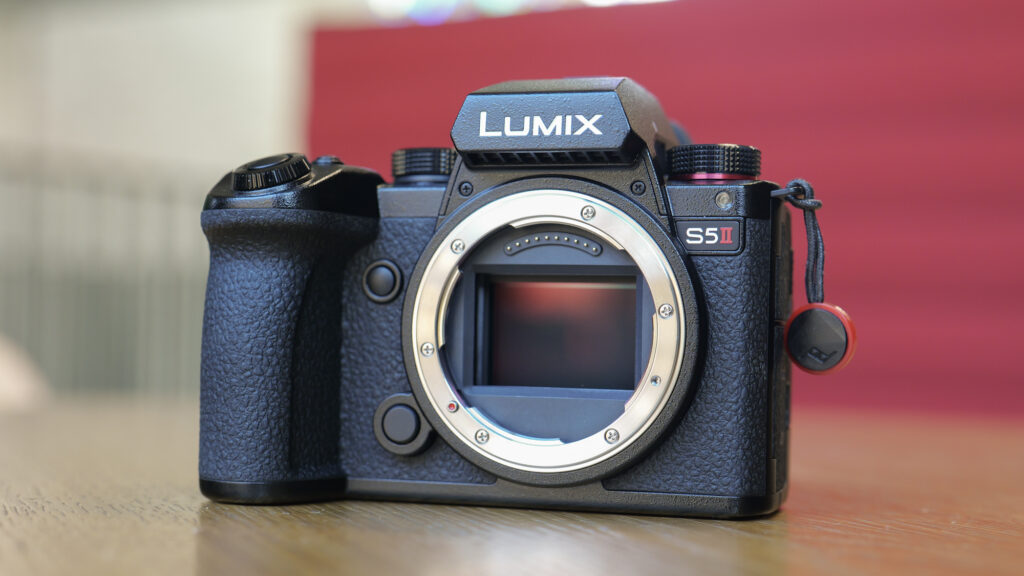
2. Panasonic Lumix S5 II (Best 6K)
The best 6K camera for YouTube
Specifications
• Type: Mirrorless
• Sensor: 24.2MP CMOS (no low-pass filter)
• Mount: L-mount
• Screen: 3″ vari-angle touchscreen
• EVF: 3.68M-dot
• Burst rate: 30fps (electronic)
• Max video: 6K full-sensor readout
Reasons to buy
- Exceptional value for money
- Class-leading in-body stabilization
- Professional-grade video tools
- Unlimited record times
- Beautiful, cinematic color
Reasons to avoid
– No tally light
– No CFexpress card support
– Cables can partially block the flip-out screen
Buy it if:
✅ You want a true hybrid workhorse — 6K open-gate, 4:2:2 10-bit recording, SSD capture, and excellent 24MP stills.
✅ You rely on stabilization — Panasonic’s IBIS is among the best in the industry.
Don’t buy it if:
❌ You need a visible tally light for talking-head videos.
Mirrorless cameras are the top choice for creators who want professional-level video with the flexibility of interchangeable lenses. The Lumix S5 II is our top recommendation for serious video shooters — and it doubles as a fantastic full-frame photo camera.
It keeps the ruggedness and color science that made the original S5 so popular but adds a major upgrade: a Phase Hybrid AF system that finally solves the focusing issues of earlier Lumix bodies. It performs significantly better with moving subjects and low-light scenes.
Unlimited 4K/60p 4:2:2 10-bit recording, 6K full-sensor video, and slow-motion 1080/180p all make this camera extremely versatile for content creators. And at this price point, it offers incredible value.
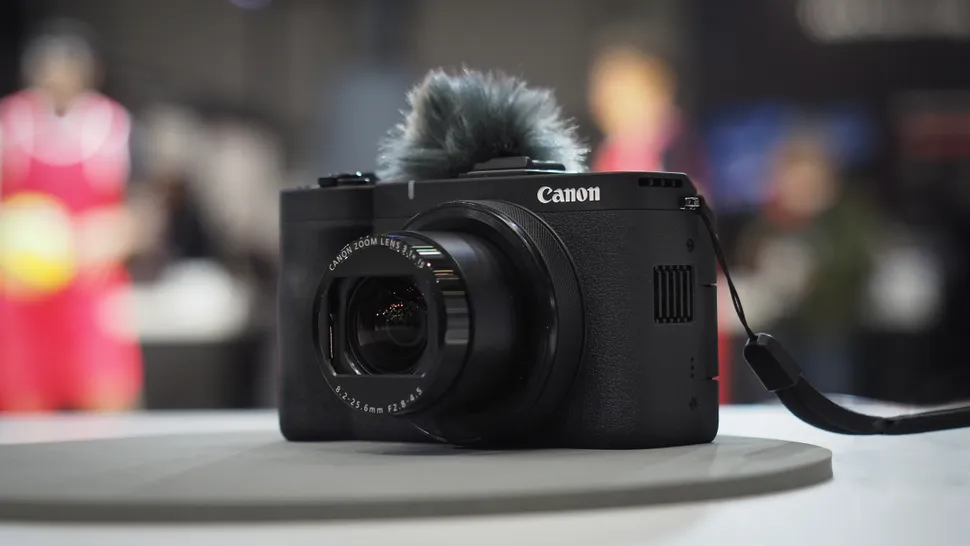
3. Canon PowerShot V1 (Best compact)
The best compact YouTube camera for vlogging and all-in-one content creation
Specifications
• Type: Compact
• Sensor: 1.4-inch CMOS
• Resolution: 20.2MP
• Lens: 16–50mm (stills), 17–52mm (video)
• Screen: 3-inch tilting touchscreen, 1.04M dots
• Viewfinder: None
• Max video: 4K 60p (with crop)
• Mic input: Yes
• Headphone port: Yes
Reasons to buy
- Excellent for live streaming
- Oversampled 4K 30p looks extremely sharp
- Fully articulating screen
- Built-in cooling fan prevents overheating
Reasons to avoid
– No viewfinder
– 4K 60p requires a crop
– Zoom rocker produces audible noise
Buy it if:
✅ You want crisp 4K: The 30p footage is oversampled for extra detail, and there’s even a 6K 30p mode with a crop.
✅ You want a versatile zoom: The integrated 16–50mm range is perfect for talking-head videos and everyday shooting.
Don’t buy it if:
❌ You need interchangeable lenses: The built-in zoom covers most scenarios, but creativity is more limited.
❌ You rely on high-quality slow motion: Although there’s 1080/120p, the quality isn’t the best.
Compact cameras have made a comeback, but very few were truly built with creators in mind — until the PowerShot V1 arrived. This camera is designed specifically for YouTubers who want a lightweight, all-in-one tool that works just as well indoors as it does outside.
Canon ditched the tiny 1-inch sensors found in typical compacts and instead equipped the V1 with a larger 1.4-inch chip, which delivers noticeably cleaner footage and improved low-light performance. Its 22.3MP readout produces beautifully detailed 4K 30p footage (oversampled from 5.7K), and you also get 4K 60p for action shots.
The built-in 16–50mm zoom is ideal for creators: wide enough for handheld vlogs, yet long enough to tighten the frame for product shots or portraits. And thanks to the built-in ND filter, you can maintain cinematic shutter speeds even when filming outdoors in bright sunlight.
For quick run-and-gun shooting, the on-camera mics are surprisingly capable, and the wind muffler included in the box actually works. If you want more control, both mic and headphone ports are available.
The V1 also supports live streaming, and because of its active cooling system, it can record indefinitely at 4K 30p with the fan on — perfect for long tutorials or stream-style content without worrying about overheating.
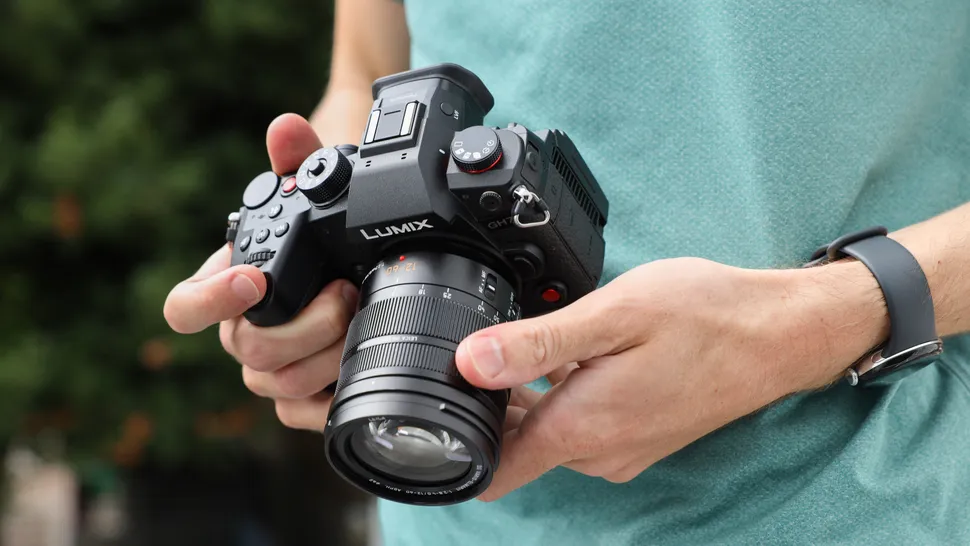
4. Panasonic Lumix GH7 (Best for content creatives)
A powerhouse mirrorless camera made for serious video creators
Specifications
• Type: Mirrorless
• Sensor: Micro Four Thirds (25.2MP)
• Screen: 3-inch articulating touchscreen, 1.84M dots
• Max video: 5.8K
• Mic input: Yes
• Headphone jack: Yes
Reasons to buy
- Extensive selection of video formats
- Unlimited recording times
- Huge improvement in phase-detect autofocus
Reasons to avoid
– Bulky, not very portable
– Battery life is only average
Buy it if:
✅ You want a do-everything camera: Its fast AF and flexible recording options make it perfect for a wide range of creative projects.
✅ You work outside often: With a magnesium-alloy frame and full weather sealing, it handles harsh conditions easily.
Don’t buy it if:
❌ You’re building a setup on a tight budget: The body price plus lenses and accessories add up quickly.
❌ You want something compact: This camera is noticeably larger than many mirrorless competitors.
Panasonic’s GH line has long been the company’s signature series for video, and the GH7 takes that reputation even further. It’s geared toward filmmakers, YouTubers, and hybrid shooters who want advanced recording options without sacrificing reliability.
The headline feature? Panasonic finally added phase-detect autofocus. After years of relying on the older contrast-based DFD system, the GH7 jumps into the modern era with much faster, much more accurate AF — especially helpful for unpredictable subjects or run-and-gun shooting.
Even though it uses a smaller Micro Four Thirds sensor, the GH7 performs exceptionally well. In lab testing, it resolved more detail than some larger-sensor competitors and delivered impressive dynamic range at low ISOs. Noise becomes more noticeable at very high ISOs, but up to ISO 8000 it remains perfectly usable for everyday shooting.
The bulky design comes from its internal cooling fan and rugged build, which are essential for its unlimited recording times and wide range of video modes. If you need a lightweight travel camera, this isn’t it — but if you need a versatile tool that handles 5.8K video, high-speed recording, and serious photo work, the GH7 is one of the strongest choices in the Micro Four Thirds system.
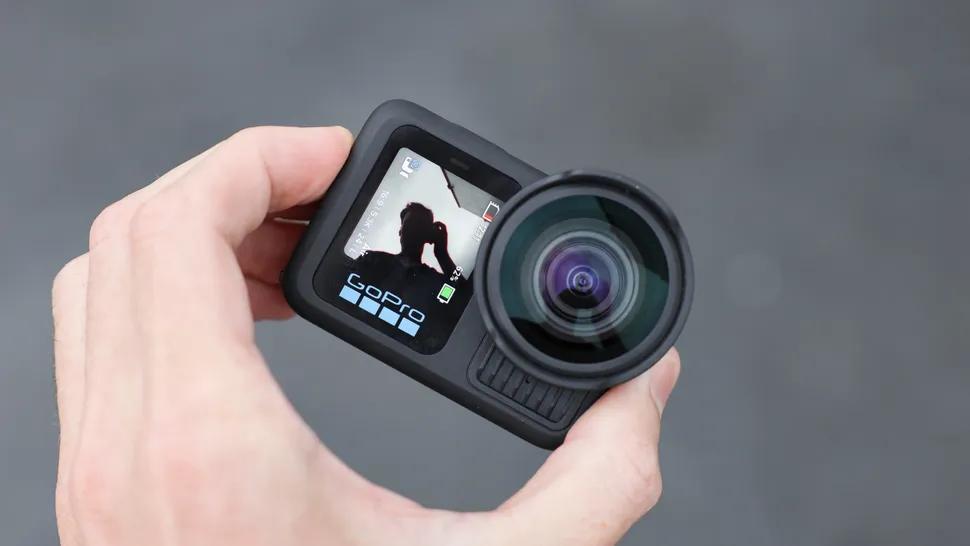
5. GoPro Hero13 Black (Best for YouTube Shorts)
A compact, rugged action camera built for creators who need flexibility.
Specifications
- Type: Action camera
- Sensor: 1/1.9-inch
- Resolution: 27MP
- Screens: Rear 2.27″, Front 1.4″
- Max video: 5.3K
- Mic input: Bluetooth or 3.5mm (Media Mod required)
- Headphone: Bluetooth
Reasons to buy
- New lens system unlocks creative shooting styles
- GPS support has returned
- 400fps burst mode for ultra-fast action
- Extremely versatile recording profiles
Reasons to avoid
– Weak performance in dim lighting
– Most new add-ons require extra purchases
Buy it if:
✅ You publish to multiple platforms and need footage that can be cropped into various aspect ratios
✅ You film extreme sports and need something tiny, tough, and waterproof
Don’t buy it if:
❌ You want to plug in microphones directly without buying accessories
❌ You often shoot in low light
GoPro cameras have become the go-to option for creators who need a tiny, indestructible camera they can take everywhere. Starting from the Hero 11, GoPro introduced a tall 8:7 sensor that produces an almost square frame—perfect for reformatting your clips for different platforms. You can easily turn one video into a horizontal 16:9 cut for YouTube and a vertical 9:16 version for Shorts.
The Hero13 Black still delivers everything people expect from a GoPro: stable footage, excellent daylight quality, and an accessory ecosystem that lets you mount it on helmets, handlebars, surfboards, or anywhere else you can think of. What sets the 13 apart is the new HB-Series lens attachments, which add options like ultra-wide and anamorphic looks. These expand the creative potential significantly—though, as usual, they cost extra.
Low-light footage remains the camera’s Achilles heel, and even with the new lenses, it can’t match the dynamic range and image quality of a larger mirrorless system. But for its physical size, durability, and flexibility, the Hero13 Black is a surprisingly powerful tool—and its price has dropped since launch.
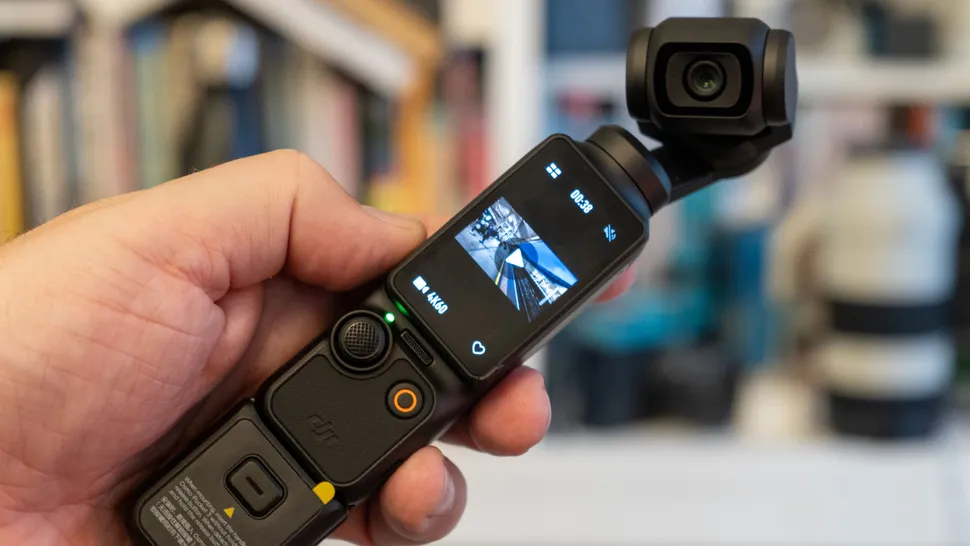
6. DJI Osmo Pocket 3 (Best for Travel)
The most advanced gimbal camera for travel vloggers and handheld shooting.
Specifications
- Type: Gimbal camera
- Sensor: 1-inch
- Stills: 8MP
- Screen: 2″ rotating touchscreen
- Max video: 4K
- Mic input: Bluetooth
- Headphone jack: None
Reasons to buy
- Much larger screen dramatically improves usability
- Creator Combo bundle delivers excellent vlogging tools
- Clean video quality across various lighting conditions
- Supports wireless mic without needing a grip
- 10-bit video and 32-bit audio options
Reasons to avoid
– Significant price increase over Pocket 2
– Auto exposure can be overly bright
– Lots of hidden features that take time to learn
– More delicate than a traditional action camera
Buy it if:
✅ You want a portable vlogging setup with smooth footage
✅ You need real gimbal stabilization rather than digital stabilization
Don’t buy it if:
❌ You need a camera that can take heavy impacts or rough use
DJI’s Pocket line has always been popular with creators who want cinematic handheld footage without carrying a full stabilizer. The Pocket 3 brings a long list of improvements over its predecessor, the most important being its larger 1-inch sensor, which greatly boosts low-light performance and overall image quality.
The rotating 2-inch display is another major upgrade, letting you flip between horizontal and vertical shooting instantly. It’s much easier to compose, control settings, and navigate menus compared to the smaller screens from older models.
Although still small, the Pocket 3 isn’t as drop-proof or impact-resistant as an action camera. You’ll want to handle it more carefully. That said, the footage quality, the advanced tracking system, and the seamless pairing with DJI’s wireless mics make it one of the most capable travel cameras you can buy.
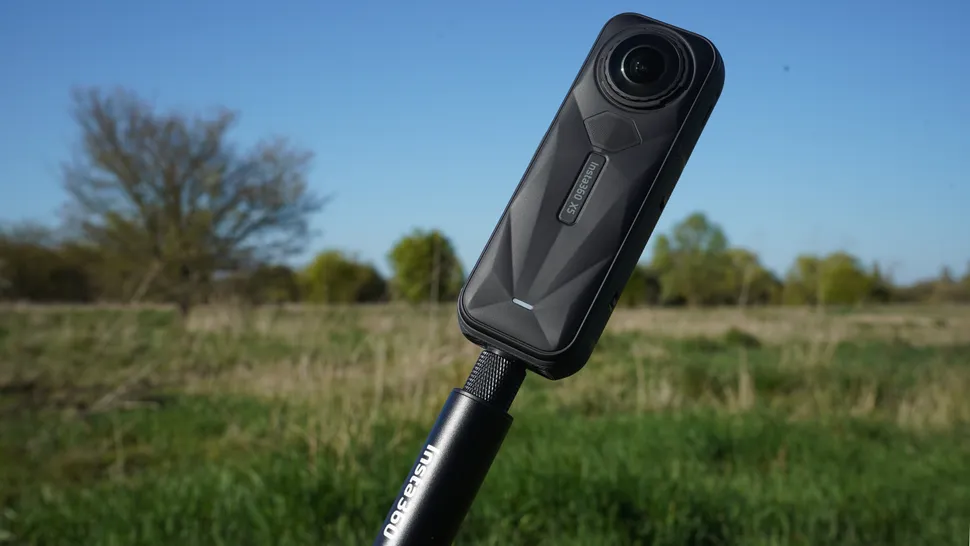
7. Insta360 X5 (Best 360 camera)
A powerful 360-degree camera with class-leading video quality.
Specifications
- Type: 360° camera
- Sensors: Dual 1/1.28-inch
- Stills: 72MP
- Screen: 2.5″ touchscreen
- Max video: 8K
- Mic input: USB-C, Bluetooth, or adapter
- Headphone jack: None
Reasons to buy
- Excellent low-light performance for a 360 camera
- Best-in-class 8K 360 video
- Strong, durable build with replaceable lenses
- Hands-free control via voice or gestures
Reasons to avoid
– Same resolution as the X4, despite being new
– Lens guards now sold separately instead of included
Buy it if:
✅ You want top-tier 360° video quality and detail
✅ You want a flexible camera that can also act like a traditional action camera
Don’t buy it if:
❌ You’re trying to save money—there are cheaper alternatives
❌ You already own the X4 and don’t need a major upgrade
Insta360 has dominated the 360-camera market for years, and the X5 strengthens that lead. It captures stunning 8K spherical footage using its dual sensors and features a redesigned body with improved waterproofing up to 15 meters. Despite the high resolution being unchanged from the X4, the new processor and better image handling deliver noticeably higher clarity and improved low-light results.
One of the biggest advantages of shooting in 360 is the ability to reframe the footage afterward. You can pull out traditional 4K clips from any angle, making the X5 function like two cameras in one: a 360 shooter and a standard action cam.
The accessory ecosystem is massive, offering creative mounts, invisible selfie sticks, lens options, and more. Combined with its rugged design and intuitive controls, the X5 feels like a premium tool built for adventurous creators.
It isn’t cheap—costing more than the GoPro Hero13 Black and DJI Pocket 3—but it provides capabilities none of them can match.
How to Choose a Camera for YouTube
Picking the right camera for YouTube isn’t about grabbing the priciest model—it’s about finding something that fits the style of videos you want to create. Different types of content benefit from different types of cameras.
If your channel focuses on movement, travel, sports, or anything fast-paced, an action camera is often the perfect match. Modern action cams deliver impressive video quality, survive rough conditions, and if you want a more immersive angle, a 360° camera can add a really unique look.
For creators aiming for a more polished, cinematic feel, a mirrorless camera is usually the best option. These cameras offer excellent image quality, advanced video features, and allow you to switch between lenses, giving you flexibility whether you’re filming indoors, outdoors, or in low light.
Compact cameras are another path to consider. While they aren’t as customizable as mirrorless setups, they’re lightweight, simple to use, and usually much more budget-friendly—great for vloggers or travelers who want a straightforward, all-in-one device.
If you plan on live streaming, remember that not every camera supports streaming natively. Some models can stream straight from the camera, but others will need additional equipment. For dedicated recommendations, check out guides specifically focused on streaming cameras.
How We Test Cameras
Our camera evaluations combine real-world use with controlled lab testing (for DSLRs and mirrorless models). In the lab, we measure:
- Resolution using ISO test charts
- Dynamic range using DxO Analyzer equipment
- Noise performance across the ISO range, also using DxO Analyzer
We then compare these lab results with real shooting experience to give accurate, reliable recommendations in our buying guides.
FAQs
Do you need a professional camera for YouTube?
Not at all. You don’t need a high-end professional camera to make great YouTube videos. A mid-range camera—and sometimes even a smartphone—can produce excellent results. You also don’t need 6K or 8K recording. For most creators, 4K is a solid standard, and 1080p is still totally usable.
What actually matters more than resolution is audio quality. A simple external microphone or a camera with a strong built-in mic (like the Sony ZV-1) will boost your video quality far more than extra megapixels.
Are phone cameras good for YouTube?
In many cases, yes. Today’s flagship phones shoot sharp 4K video and offer impressive stabilization and image processing. If you’re thinking of filming with your phone, check guides that compare the best smartphones for video so you can pick one that suits your needs.