
Desktop computers offer significantly more raw power and processing capability for your photographic editing needs compared to even the most powerful notebooks available today (not that a great deal of processing capability is required). Moreover, if you enjoy expanding your creativity and improving your skills, desktops are an excellent choice because they offer a future-proofing option through upgradable CPU and GPU hardware.
When selecting the right desktop computer, you will have the opportunity to select a high-quality monitor that is generally larger than traditional laptop screens (between 21 and 30+ inches in size). Not only does this allow for greater comfort, but it also creates an ideal workspace for all types of photo editing. As well, when you have the option of using a full-sized keyboard and mouse that allow for better ergonomic support than can be achieved with a laptop keyboard or trackpad, your editing will be greatly improved.
The computers on this list have been selected by our experts based on their comprehensive review and testing results. Additionally, if you prefer a portable device, please view our guide on the best tablets for photo editing.
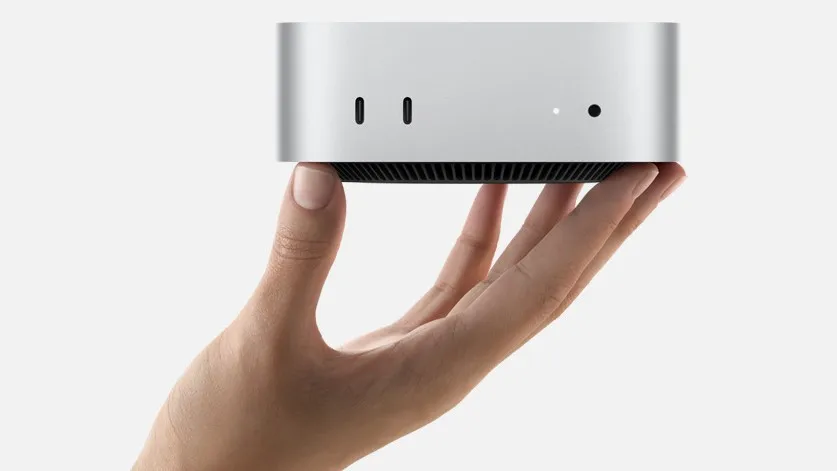
1. Apple Mac Mini M4 2024 (Best Overall)
The best desktop computer for photographers overall
Specifications
| Item | Details |
|---|---|
| CPU | Apple M4 / M4 Pro |
| Graphics | Up to 16-core integrated GPU |
| RAM | Up to 24GB |
| Storage | Up to 512GB SSD |
| Connectivity | 2× front USB-C, 3× Thunderbolt 4/5 (USB-C), 1× HDMI, Headphone jack, Ethernet, WiFi 6e, Bluetooth 5.3 |
| Dimensions (WxDxH) | 127 × 127 × 50 mm |
| Today’s Best Deals | Black Friday (Amazon) |
| Reasons to Buy | Very compact Excellent performance Great value |
| Reasons to Avoid | Awkward power button placement Limited gaming capabilities Not upgradeable |
Buy it if
✅ You want an affordable Mac: Starting at $599/£599, this is the most cost-effective way to get a Mac.
✅ Space is at a premium: The new smaller design makes this Apple’s most compact computer ever.
Don’t buy it if:
❌ You want an all-in-one solution: You just get the computer, but not a monitor and keyboard.
❌ You want any form of upgradability: Like most Apple products, the components can’t be upgraded after buying.
With the new, more compact dimensions of Apple’s Mac mini M4 desktop (2024), it has now been able to become yet another powerful desktop. From its ability to run photo-editing software to video editing software, the base model of the M4 will provide enough power for photo editing; it will also be able to browse the internet and edit videos without breaking a sweat, as well. Its near-silent operation and small size make it an ideal desktop solution for working in a quiet environment.
Although the front-facing USB-C ports provide an added level of convenience, keep in mind that they operate at lower rates than rear-facing Thunderbolt ports. That said, if you take advantage of the M4’s performance enhancements (especially for artificial intelligence AI), you are going to see some significant improvement when running large workloads on your system. However, because it has an integrated GPU, it is not going to be a great system for playing games; at the same time, for what you get for the price and size of the Mac mini M4, it cannot be compared to any of the current offerings from any Windows or Linux-based operating system, and therefore, is our current #1 pick overall.
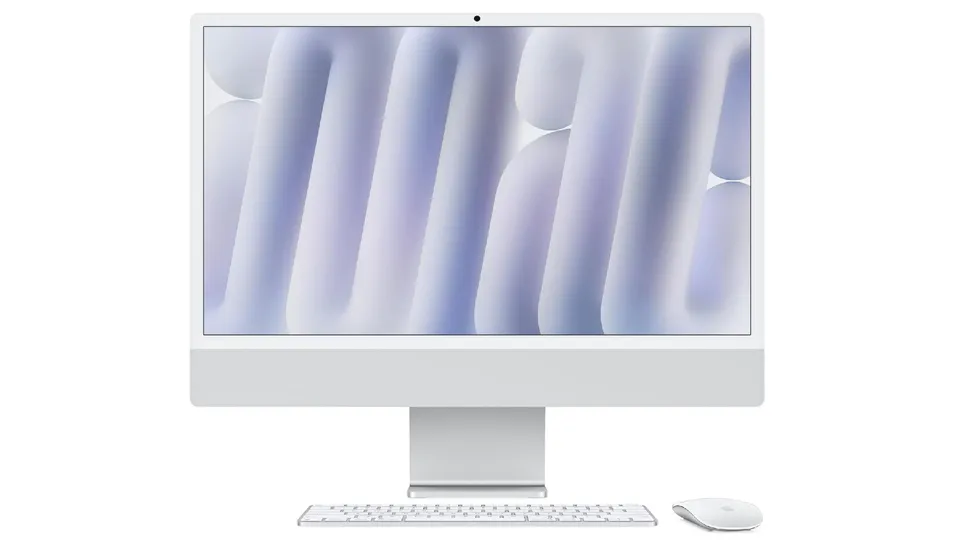
2. Apple iMac 24-inch M4 2024 (Best All-in-one)
The best all-in-one desktop computer for photographers
Specifications
| Item | Details |
|---|---|
| CPU | Apple M4 (8-core or 10-core) |
| Graphics | 8-core or 10-core integrated GPU |
| RAM | Up to 32GB |
| Storage | Up to 2TB SSD |
| Connectivity | Up to 4× Thunderbolt 4 / USB-C ports, headphone jack, WiFi 6E, Bluetooth 5.3 |
| Dimensions (WxDxH) | 54.7 × 46.1 × 14.7 cm |
| Reasons to Buy | Excellent performance from M4 chip 16GB RAM 12MP webcam with Center Stage |
| Reasons to Avoid | 60Hz display refresh rate Mouse charging port awkwardly placed Limited port selection on base model |
Buy it if
✅ You want the best all-in-one computer: Everything is included in the box.
✅ You want a stylish desktop: The thin design and vibrant color options makes for attractive aesthetics.
Don’t buy it if:
❌ You need a larger display: With only a 24-inch option available, those wanting more screen real estate should consider a Mac mini with a separate display.
Apple’s iMacs are the top options for computers that have a keyboard and monitor combined. These new computers have the M4 chip for fast and effective computer use (including daily tasks and photo editing) as well as having a standard memory capacity of 16GB RAM (this has been a common complaint in past iMacs). The new iMac also comes with an amazing new display: the 4.5K Retina display that has the option for a nano-texture finish that makes viewing the computer’s content even better, although some people may want the display to have higher than 60Hz refresh rates.
One of the biggest draws for the new iMac is its appearance. The redesigned, colorful aesthetic from the M1 model continues, however Apple has created new, vibrant Color options that better fit with the rest of its product line. Also, even though there is now only one size available (the 24-inch display) so some people may find this to be limiting, the thin, sleek profile and small footprint mean that it will fit perfectly into nearly any home or office environment. Additionally, the improved 12MP webcam and Center Stage functionality is a nice improvement for video conferencing purposes, however the Magic Mouse’s charging port continues to be placed in awkward locations which can be annoying for some users.
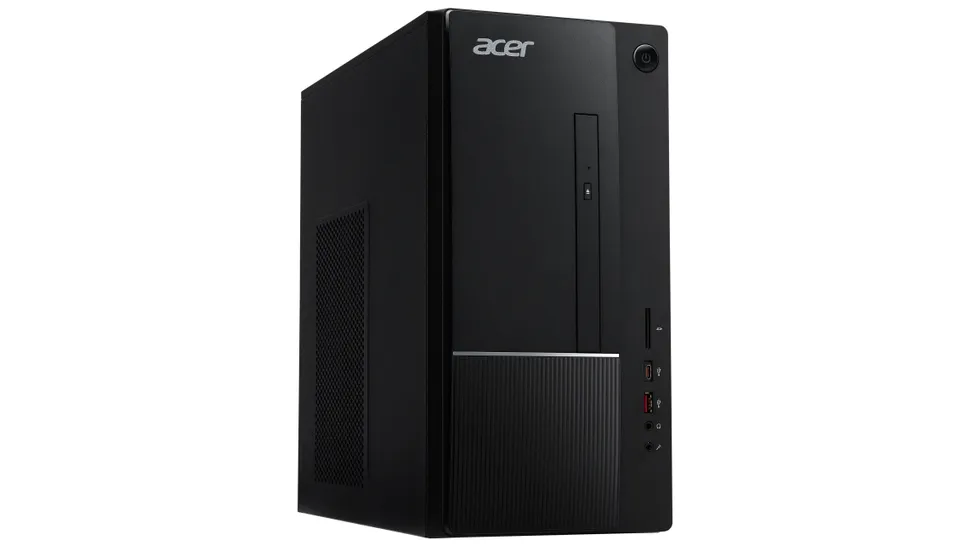
3. Acer Aspire TC (Best budget PC)
The best budget desktop PC for photographers
Specifications
| Item | Details |
|---|---|
| CPU | Up to Intel Core i7-11700F (8-core, 2.5GHz) |
| RAM | 8GB DDR4 |
| Storage | 1TB SSD |
| Connectivity | Gigabit Ethernet, 802.11ac Wi-Fi |
| Dimensions (WxDxH) | 340 × 163 × 350 mm |
| Reasons to Buy | Cheap Compact |
| Reasons to Avoid | Limited RAM |
Buy it if
✅ You’re after great value: You get good performance for a modest outlay here.
✅ You want easy upgradability: unlike the Mac options above, you can upgrade the hardware in this PC down the line.
Don’t buy it if:
❌ Aesthetics are important: This is an old-school PC tower design – best kept hidden under your desk!
❌ You’re a demanding user: This should cope with modest workloads, but it’s not designed to break speed records.
If you want a low-end desktop computer with a good price point for editing your photographs, then the Acer TC series is an excellent option. This line of computers has numerous specifications to choose from and is very affordable across all options, however, it does have a rather small amount of total RAM (8GB), which is a low requirement for editing images at this time. With the TC series you will get a sleek and compact design that won’t take up too much area on your desk.
You do not have to worry about whether or not you will be able to upgrade your system later, since the TC series allows you to expand the memory up to 32GB and has a built-in memory card reader. The TC series includes a 1TB Solid State Drive (SSD) with select configurations, providing ample and rapid storage space for processing images taken at higher resolutions and video shot in 1080p quality. Keep in mind, however, that all models have the ability to add more internal disk space, or purchase our recommended list of external storage alternatives.
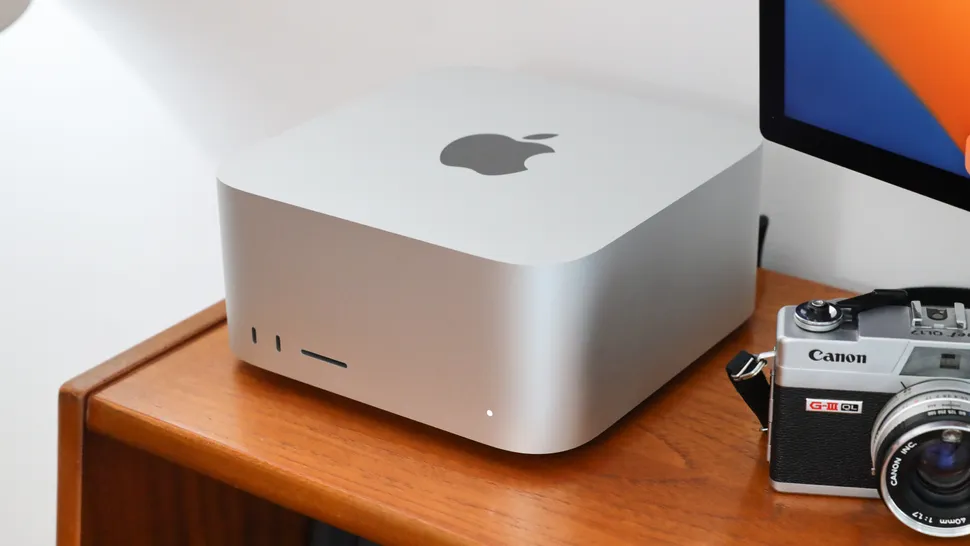
4. Apple Mac Studio M4 Max 2025 (Best Mac for power)
The most powerful Mac for photographers
Specifications
| Item | Details |
|---|---|
| CPU | Apple M4 Max |
| Graphics | Up to 40-core integrated GPU |
| RAM | Up to 128GB |
| Storage | Up to 8TB SSD |
| Connectivity | 4× Thunderbolt 5, 2× USB-A, 1× HDMI, headphone socket, Ethernet, WiFi, Bluetooth (Front: 2× USB-C, SDXC slot) |
| Dimensions (WxDxH) | 197 × 197 × 95 mm |
| Reasons to Buy | Small and compact profile Lots of power, even in the base model Ports galore |
| Reasons to Avoid | Speccing up gets very expensive, fast No parts upgradability |
Buy it if
✅ You want the most power in the smallest package: There’s enough performance in this compact, svelte machine to shame many hulking computer towers.
Don’t buy it if:
❌ You want any form of upgradability: No part of the Mac Studio is upgradable, so you’ll need to spec it carefully at the point of purchase to stay future-proofed.
The new Mac Studio with Apple’s M4 Max chip is arguably the most powerful computer in the least amount of space. The compact size of the systems can make it easy to underestimate how much computing power is contained within. We found the Mac Studio to be extremely fast when editing photographs in Adobe Lightroom and Adobe Photoshop. The Mac Studio also performed very well when editing video in Apple Final Cut Pro, even with multiple streams of video and effects applied.
While the entry-level configuration for the Mac Studio is priced competitively for independent creative professionals and small studios, once you begin upgrading the specifications, the prices quickly rise. Therefore, we recommend sticking with the M4 Max rather than upgrading to the M3 Ultra processor, which will result in a significant price increase and provide very little added benefit to users.
5. Apple Mac Mini M2 2023 (Budget Mac)
A cheaper Mac Mini that’s still very powerful
Specifications
| Item | Details |
|---|---|
| CPU | Apple M2 or M2 Pro (8-core or 10-core) |
| Graphics | Up to 16-core integrated GPU |
| RAM | 8–32GB |
| Storage | 256GB–8TB SSD |
| Connectivity | 2× USB4/Thunderbolt/DisplayPort, HDMI, headphone socket, Ethernet, WiFi, Bluetooth |
| Dimensions (WxDxH) | 197 × 197 × 36 mm |
| Reasons to Buy | Blisteringly fast performance Excellent value Extra Thunderbolt ports |
| Reasons to Avoid | Only configurable to 32GB Same design |
Buy it if
✅ Minimalism is a must: The Mac mini is wonderfully compact: it’ll fit almost anywhere
✅ You don’t want to sacrifice speed: It may be small, but the M2 chip inside packs a serious punch.
Don’t buy it if:
❌ You’ll be connecting lots of peripherals: ports are in short supply here, making a dongle almost essential.
❌ You can’t stretch to a memory upgrade: The base 8GB config isn’t really enough – go for 16GB for peace of mind.
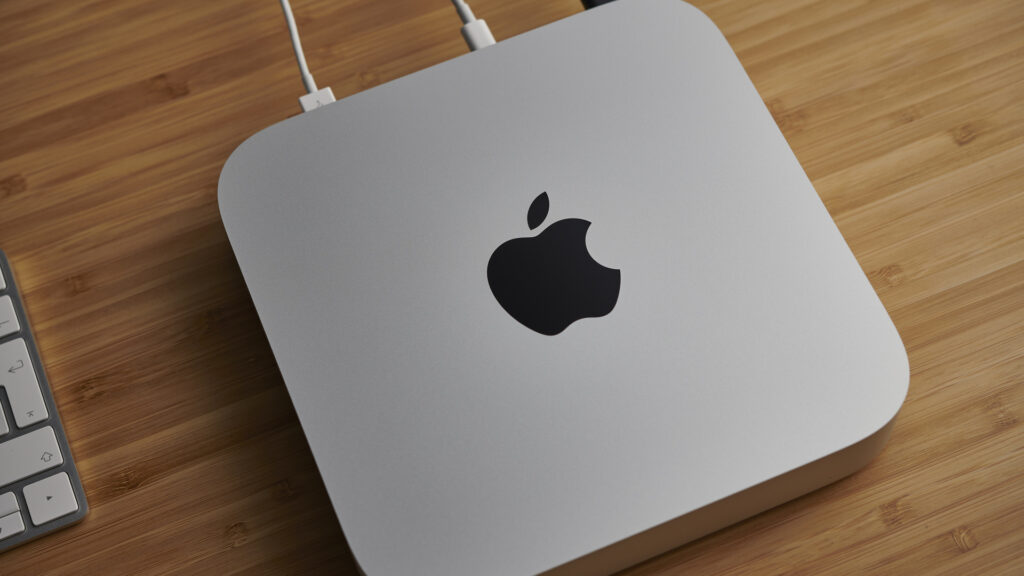
Though nearly a year old, the Mac Mini is an excellent option for a desktop computer that is much less expensive than the new 2024 model. You will, however, have to purchase your own display, but since the Mini is so small (197 x 197 mm x 36mm), it should fit on any desk.
This 2023 Mini M2 is different from previous generations of Mac Mini’s in that it uses Apple’s own M2 processor (which has been designed specifically for computers). The construction of the M2 processor is similar to that of the processors used in Apple’s iPhones/iPads but has been beefed up to handle the demands of desktop computing—and boy, did Apple create an outstanding product.
What’s more, the M2 processor is extremely energy-efficient and can easily outpace many of the higher-end Intel Core-series processors. The option of up to 32GB of RAM should be enough for serious image editing work. However, we recommend avoiding the base 8GB configuration as it does not provide enough future-proofing for your computer.
6. Geekom A6 mini PC (Best micro computer)
Small in size, big in performance
Specifications
| Item | Details |
|---|---|
| CPU | AMD Ryzen 7 6800H |
| Graphics | Radeon 680M (integrated) |
| RAM | 32GB |
| Storage | 1TB |
| Reasons to Buy | Lots of ports Flexible specification Easy to upgrade |
| Reasons to Avoid | May require self-install of OS Limited graphics power |
Buy it if
✅ You want a Mac mini on a budget: The Geekom A6 is just as compact as its Mac rival, while offering more RAM and storage, all for less money.
✅ You need plenty of ports: Unlike a mac Mini, the A6 sports plenty of USB-A and Type C ports, plus HDMI, Ethernet and even an SD card slot.
Don’t buy it if:
❌ You’re a power user: This is a machine designed to be inconspicuous. If you want a real speed demon, a bigger PC is a better bet.
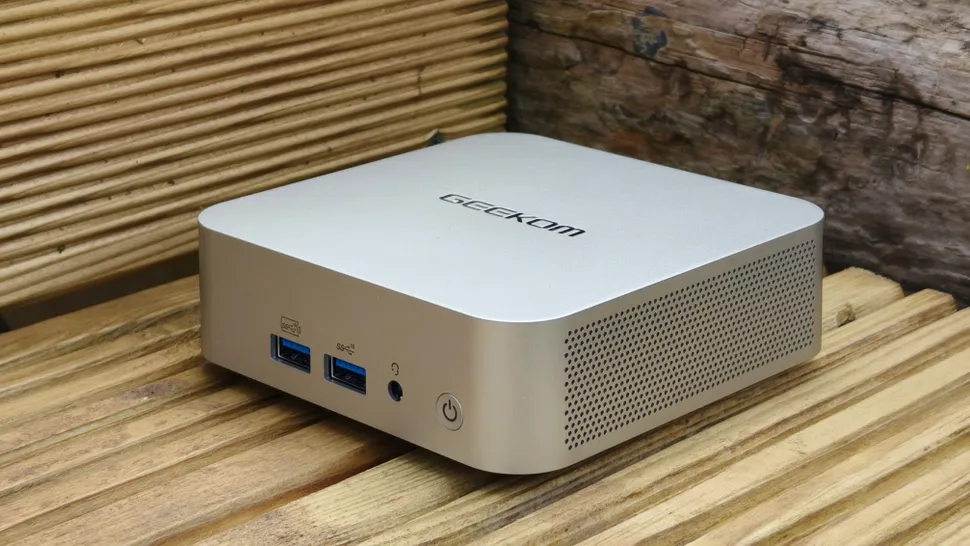
If you want a desktop computer but don’t want the typical large tower, a miniature portable PC may be a good choice for you: The Geekom A6 Mini PC. The Mini A6 is small enough to fit inside a jacket pocket, yet it has enough power to perform serious photo-editing tasks and has more options than most laptops allow users to connect peripherals to their computers.
The Mini PC is equipped with an 8-core AMD Ryzen 6800H CPU and 32GB of RAM. The Mini PC features fast, NVMe storage, with a 1TB SSD, and has the option of adding a second SATA 2.5″ drive, allowing for additional data storage.
Connectivity is very good, with many USB ports; the build quality is also very good.
In testing, I found the Mini PC to perform well in everyday tasks and also to be more than sufficient for image editing. The Mini PC’s RAM (32GB) gives it a considerable amount of virtual memory, thus making it easy to handle high-resolution RAW images in Adobe Photoshop. Heavy data workloads may push the limits of this form-factor device, but to me there are only minor trade-offs when using a smaller-sized computer.
7. Lenovo IdeaCentre AIO 27″ (More options)
A great value Windows all-in-one
Specifications
| Item | Details |
|---|---|
| CPU | Up to AMD Ryzen 7 7735HS |
| Graphics | Integrated |
| RAM | Up to 32GB |
| Storage | Up to 1TB SSD |
| Display | 27″ IPS Full HD (1920 × 1080) |
| Reasons to Buy | Competitive price Decent IPS touchscreen |
| Reasons to Avoid | Limited RAM and storage CPU not the fastest |
Buy it if
✅ You want an iMac on a budget: Sure, it’s not going to rival an iMac on raw speed, but the IdeaCentre AIO looks the part, and it’s well priced.
Don’t buy it if:
❌ You’ll be pushing things to the max: There’s enough power here for most situations, but really intensive workloads could prove too taxing.
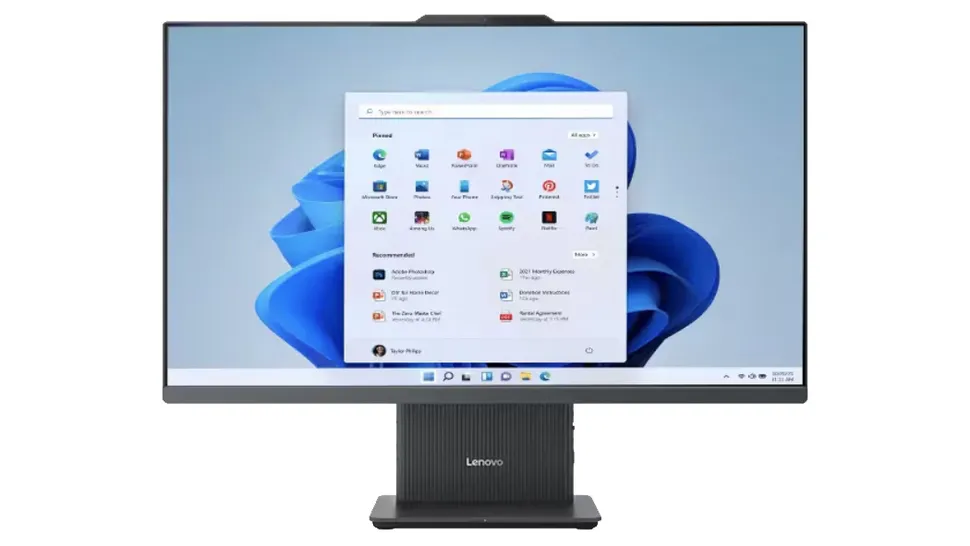
The Lenovo IdeaCentre AIO desktops provide an alternative to owning an Apple iMac if you are looking for a powerful and stylish desktop computer for editing photos. Although the hardware is not the absolute latest on the market, it has enough performance power to handle all of Adobe’s products including Photoshop.
The Lenovo IdeaCentre AIO PCs are especially useful for editing photos because of their monitors (which come in several sizes; we prefer the 27-inch screen). The 27-inch monitor has a 1080p resolution and features IPS display technology, which ensures consistent contrast and viewing angles across the entire screen. The significant benefit of choosing this product over an Apple iMac is the reduced price.
How to choose the best desktop computer
Mac or PC?
Creative professionals have long regarded Macs as the ideal platform for graphic design and video editing. This preference stems from a time when Photoshop was only available for Macs. There are, however, an increasing number of desktop PCs that offer excellent performance in these areas as well, along with a larger range of price points to choose from, making them much more affordable than in years past. The iMac and Mac mini/Studio remain solid choices based on the unusually high processing speeds of their Apple Silicone chip. Unfortunately, the design of these computers precludes the ability to add or replace any internal components, which will limit their future performance. In contrast, with a tower-style PC, you can replace or upgrade just about every component and keep it running at optimal speeds for an extended period of time.
What processor (CPU) should I look for?
Both Intel and AMD manufacture processors, which allow the CPU market to flourish. AMD offers four levels of performance in their product line (Ryzen 3, 5, 7, and 9) with increased performance corresponding to increased model numbers. The same is true for Intel’s product line with the Core i3, i5, i7, and i9; increasing performance is indicated by increasing numbers. When evaluating these two products, one must also look at “base frequency,” which indicates a processor’s processing speed (in GHz) and how many processing cores it has; the minimum number of processing cores should be four, while the more cores present, the better the product will perform.
How much RAM do I need?
Currently, the images or videos being edited as well as the active applications are being held in RAM, therefore the more RAM that is available the better will be the performance. Many users experience issues with applications consuming excessive amounts of RAM, especially web browsers such as Chrome and editing high-resolution images with numerous layers within software such as Adobe Photoshop. While it is still common to see many computers sold with an 8GB configuration, we would highly recommend no less than 16GB in order to get your best possible results during any type of editing process. On the positive side of Desktop PCs vs Laptops, the ability to upgrade or add more RAM on a Desktop Computer Tower is a benefit. However, this will not be possible on Apple iMac, Mac Mini or Mac Studio products due to designed limitations.
How much storage do I need?
Every desktop computer should utilize SSDs (Solid State Drives) due to their superior performance over traditional HDDs; however, it is not recommended to select smaller capacity SSDs. If you’re editing and creating 4K content, a minimum capacity of 512GB is required, but 1TB+ is ideal. Fortunately, the tower portion of most desktop computers has enough room inside to install an additional (2nd) HDD/SSD later, and external (3rd) HDDs can also be connected to increase your overall storage capabilities.
Do I need a fast graphics card?
Because a desktop computer tends to be larger than a laptop, it’s generally possible to install a separate graphics card instead of integrating it into the CPU (central processing unit). A mid-range graphics card can help speed up the amount of time that it takes to apply a filter in Photoshop and will also help you push your video encoding time down, while all of their counterparts are intended specifically for gaming. The cost of a high-end graphics card will be significantly higher than that of a standard graphics card.
Should I pick an all-in-one computer?
All-in-one PCs offer an alternative option in addition to traditional desktop PCs. With these computers, all of the components are located inside of the monitor itself. A good example is Apple’s iMac line of computers. A number of benefits come with all-in-ones, the first being their premium look and small footprint on the desk, allowing you to use only the screen, mouse, and keyboard instead of taking up valuable desk space with a large box. Because all-in-ones are integrated into the monitor itself, you will also save money because you will not need to purchase a monitor separately.
However, there are also disadvantages to consider when purchasing an all-in-one PC. Unlike traditional PCs, where the hardware can generally be upgraded using standard parts, the hardware in all-in-one computers is designed specifically to fit behind the monitor, similar to the way that laptops work. All-in-ones are generally more expensive and you will have to consider the quality of the monitor when making your purchasing decision rather than having the added flexibility of having a selection of the best monitors available for photographers.
How we test the best desktop computers
As part of our computer evaluation process, we measure the overall performance of each product using established Industry Benchmarking Tools (IBT). In addition to IBT testing, we also conduct our own Real World Testing (RWT) Of Computers through applications such as Adobe Photoshop. For all-in-one Desktop PCs (which contain both the computer and monitor within the same case), we evaluate the quality of the monitor that is included with the product, as well as the amount of color space coverage it provides. Whenever feasible, we will utilize a Monitor Calibration Device (MCD) to evaluate the Performance of the Monitor and determine how well it will perform when used for color-sensitive editing and photographic work. After gathering this information, we will compare the results to the current price of the product to establish whether the product is priced appropriately and offers good value for the money.