
These are the best camera drones for aerial photography and videography, both for cameras and flight controls
Not long ago, just a couple of years ago, camera drones were essentially novelty toys for tech-savvy people; however, now they have become a means of creativity that very few photographers or filmmakers would think of doing without.
There are devices for amateurs as well as professionals, resulting in a brilliant selection of creative angles and incredible new perspectives that just could not have been possible in any other way. The potential has always been there and very exciting, but what makes it feasible and what is the correct decision?
By examining a camera drone, we are seeking the suitable harmony of cost, camera quality, and convenience. The final category, in most countries like the UK and the USA, is influenced by regulations that allow drone operations to be simpler if the drones weigh less than 250g (0.55 pounds).
If high-quality results are what you want, then you will have to consider bigger image sensors and maybe even the feature of recording with cinema-grade codecs like ProRes. At present, it is also permissible to choose different technologies such as a 360 camera. However, more significant are the necessary things – a gimbal to stabilize the camera (except on a 360 system) and good battery life.
AI plays an important part in the shooting process as well, as most drones are equipped with different levels of subject tracking that can be a great help in obtaining a smooth shot. In addition, safety is a factor that is improved by collision sensors though these can be expensive.
Best camera drones
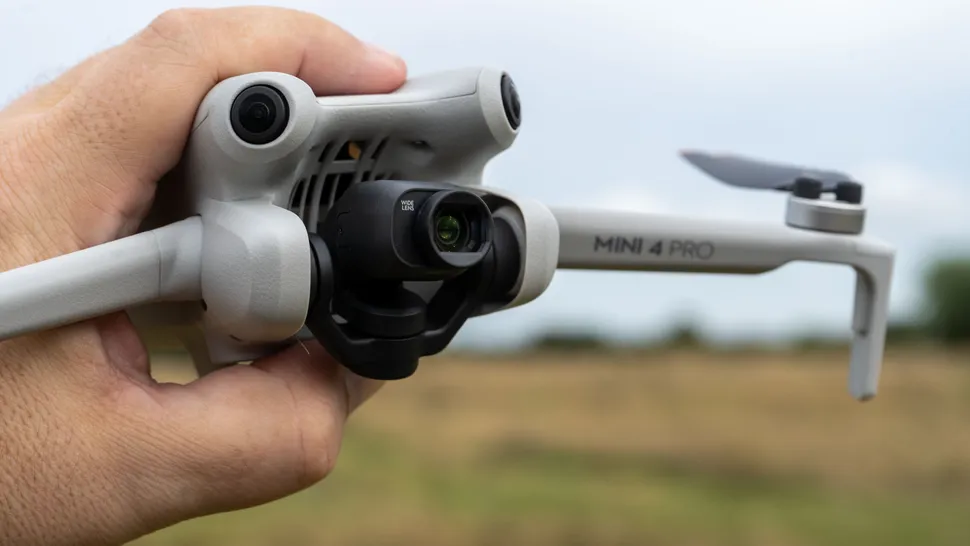
1. DJI Mini 4 Pro (Best drone overall)
A full set of pro functions in an ultra-light drone
| Category | Details |
|---|---|
| Specifications | Weight: 249g Dimensions (folded): 148 × 94 × 64 mm Dimensions (unfolded): 298 × 373 × 101 mm Controller: Yes Video resolution: 4K @ 100fps or 60fps HDR Camera resolution: 48MP Battery life: 34 minutes Max range: 20km / 12.4 miles Max speed: 58 kph / 36 mph |
| Reasons to Buy | + All-round collision sensors + High-quality AI for orbiting, etc. + Camera switches to optical portrait mode + 4K 60fps shooting capability + Up to 200fps slow-mo |
| Reasons to Avoid | – Light drone affected by gusts – Priced similarly to Pro drones – Fly More Kit doesn’t include filters |
| Buy It If | ✔ You want the ultimate power under 250g ✔ You want excellent range and reliable control |
| Don’t Buy It If | ❌ You want the best budget/value option ❌ You want true telephoto (only digital zoom available |
The forerunner to this drone, the DJI Mini 3 Pro, did an enormous impact when it got released in May 2022 – it changed the very nature of what DJI was creating in the super-light category, basically adding some collision sensors and a 4K 60fps camera which could physically rotate to the vertical mode (a feature that is still hardly matched by much bigger craft).
The Mini 4 Pro has completed the work less than 18 months after the first one, making the collision sensors omnidirectional and adding 10-bit D-Log M video and waypoint programmable flights, and still staying under the magic weight. Besides, it can do HDR at a full 60fps instead of the 30fps limitation of the Air 3 Pro.
Besides, DJI’s revamped O4 radio system is also available on the Mini 4 Pro, and this gives a theoretical range of up to 20km (over 12 miles) or, what is more, very good reception at reasonable operational distances. The upgraded DJI RC 2, as used with the DJI Air 3, is a choice, which provides a very pro feeling in hand, thus one can decide on a model with a screen to save the (rather minimal) trouble of connecting a phone). In some markets (start chanting “USA, USA…”), there is also a choice of batteries if you don’t mind pushing the weight limit, thus you will be able to extend the flight time from the already good 30 minutes to more than 40 (again, always take these with a pinch of salt – it depends on conditions and flying style). However, it is better for you to know that the drone will be aware of the weight change and can alert authorities.
What the Mini 4 Pro is trying to tell us is that DJI will not let the weight restriction be the reason why creatives cannot accomplish their goals. The only downside that is inevitable is the pricing, which is quite a bit closer to the company’s higher-end models than other ultralights. If you are willing to spend less, there is a cheaper DJI Mini 3 that does not have the collision sensors and some of the output options but will create almost the same video and stills for the average user.
| Category | Details |
|---|---|
| Features | High resolution, 10-bit video, rotating camera, mission planning |
| Design | Efficient styling but simple to use |
| Performance | Flawless performance within wind parameters |
| Value | A good price for all the features, but there are cheaper ultralights if you can compromise |
2. DJI Air 3S (Best drone for flexibility)
Dual camera drone for switchable zoom makes this hard to beat
| Category | Details |
|---|---|
| Specifications | Weight: 724 g Dimensions (folded): 214 × 101 × 89 mm Dimensions (unfolded): 266 × 325 × 106 mm Controller: Yes Video resolution: 4K @ 60fps Camera resolution: 50MP + 48MP Battery life: 45 minutes Max range: 20 km / 12.4 miles Max speed: 75 kph / 47 mph |
| Reasons to Buy | + Dual-cameras offer creative choice + All-round collision sensors for safety + 4K 100fps slow motion + Long-range and long battery life |
| Reasons to Avoid | – HLG and D-Log M 4:2:0 best output – Smaller sensor than Air 2S |
| Buy It If | ✔ You want a true telephoto (dedicated lens) ✔ You want a great all-rounder: stable, long range, balanced features at a sensible price |
| Don’t Buy It If | ❌ You want to stay under 250g ❌ You need 5K video like the Air 2S |
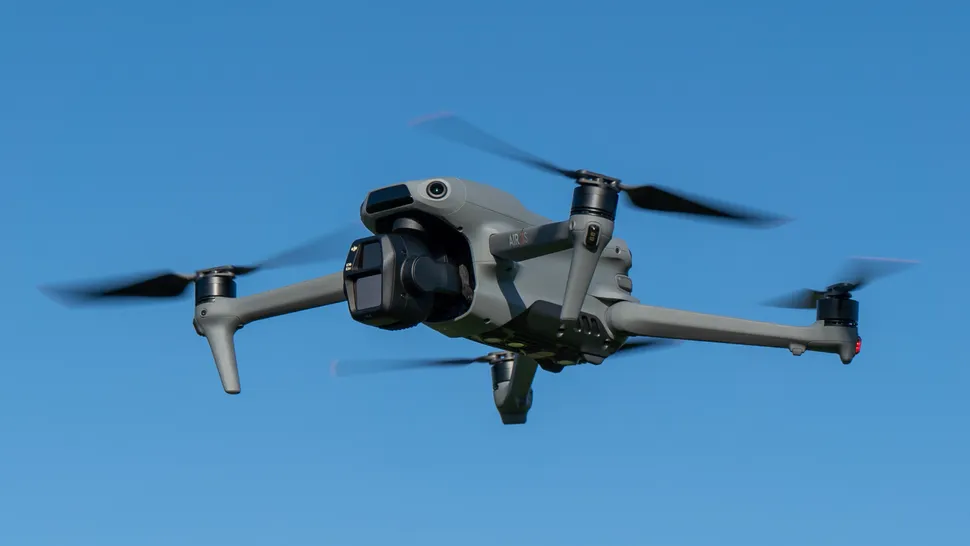
The DJI Air 3S is pretty much flawless. The only significant issue is that if you live in the U.S., you can’t easily get it unless you order it directly from DJI (which you can, without any problem). So, you may have to choose the older DJI Air 3 instead. It’s still a nice drone, but…
The Air 3 introduces a new, larger 50-megapixel 1-inch sensor for the ‘main’ camera, which is 24mm EFL, and retains a 48-megapixel 1/1.3-inch sensor for the 70mm EFL f/2.8 tele lens. Compared to a standard single-camera drone your creative capabilities are multiplied exponentially – just as an example you can track people or a moving subject. Besides that, it can also be very helpful for survey jobs with a little extra safety.
DJI have completely refreshed the product and made it a lot more convenient; the drone has 42GB of built-in storage so in case you forget a MicroSD card you are still covered. It moves through the air quickly with great stability, and the manufacturers can feel a lot more confident than they did with a ‘Mini’ type drone (although it is almost 3 times the weight). Low light is impressive,
One of the things that worried me was how different-sized sensors would affect the optics blending together, but the question didn’t even come up in my tests. What I found was the dynamic range to be very impressive and the 100-12,800 ISO range is just the beginning; DJI has even equipped a new low-light collision sensing system with Lidar that makes it harder to crash (I couldn’t do it during my testing).
Just consider this as the cheaper and more up-to-date version of the Mavic 3 Pro which, in some respects, is actually better too! Along with beaming features like Lidar to its bigger, heavier sibling, it also receives AI subject tracking and even Waypoints, battery life to die for. Why pay more?
If you are thinking of doing the occasional survey work, and maybe getting some pictures, I would say the 4x zoom looked very nice and, frankly, this drone seems to be very aggressively taking over the user-case of the Mavic 3.
| Category | Details |
|---|---|
| Features | Dual camera system, waypoints, >40 min flight time, and new collision sensors that work in the dark |
| Design | Excellent cameras and capable of shooting 10-bit video and D-Log M |
| Performance | DJI claims 14 stops of dynamic range; user confirms excellent dynamic range |
| Value | Slightly more expensive than Mini 4 Pro but offers much better technology; worth testing online |
3. HoverAir X1 Pro Max (Best follow-me drone)
Folds out like a book, flies itself with AI, and takes on the pros for quality
| Category | Details |
|---|---|
| Specifications | Weight: 193 gDimensions (folded): 105 × 149 × 34 mmDimensions (unfolded): 127 × 145 × 30 mmController: Smartphone via app / external controllerVideo resolution: 8K @ 30fpsCamera resolution: N/ABattery life: 16 minsMax range: 500 m / 1000 mMax speed: 25.2 kph / 15.8 mph |
| Reasons to Buy | + Rotors inside a safety cage+ Brilliant folding design+ Automatically follows you and records+ 8K video |
| Reasons to Avoid | – Needs a phone for first use– Relatively low battery life |
| Buy It If | ✔ You want a drone that can fly itself (AI follow) ✔ You’re looking for something fun and safe to fly |
| Don’t Buy It If | ❌ You expect a high workload or professional shooting ❌ You want a long range (500 m only) |
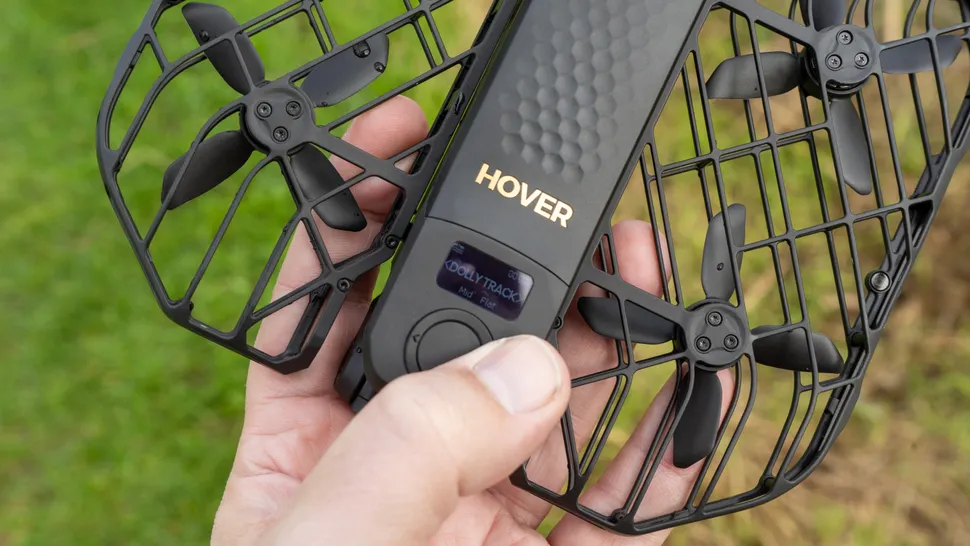
An 8K camera is what you would imagine as a competitor to the DJI Inspire, whereas the minimal folding design and AI subject tracking features are more like a competitor for the Flip or the Neo. The truth is that HoverAir created the AI tracking drone (which didn’t require a controller) first and this X1 Pro Max is a generational leap, with longer battery life and a better camera.
Therefore, it is a more potent, safer version of the already very amazing HoverAir X1, and it also has the feature of being a ‘real drone’ as it is now possible to purchase not only the drone (which can be flown with nothing more than its AI, or at most a phone app) but also a beacon/ remote control.
Granted, there isn’t quite the range of miles that some other drones have, however, it does get things away from a mere phone screen and puts real physical controls into the hand, thus you have actual control of an 8K camera in the air. At this moment, you will most likely also want to have a longer battery life but since it is replaceable, you just need to be sure that you have a spare. In addition, HoverAir bundles various packages, and in some of them, you will find a charging hub.
If your goal is to make high-quality content with yourself being the main focus and most of the time you don’t have another camera operator with you, then this is definitely the drone for you, and it manages to impress.
NOTE: In case you are only interested in an inexpensive way of getting into the ‘follow me’ technology, the Neo is what you should be considering. I have tested both and penned down my thoughts on whether I would still purchase the HoverAir X1 or the DJI Neo in this category, and that is the firmware evolves you can bet I will be keeping my attention on this. The Pro Max is all about the bigger and better camera, so it’s a premium choice (as well as a choice for those who cannot buy DJI).
| Category | Details |
|---|---|
| Features | Acts as an “angel on your shoulder” and captures impressive video with the beacon controller |
| Design | Brilliant book-fold design, refined from the X1 |
| Performance | AI tracking is impressive; camera performs well, though battery life & range could be longer |
| Value | Pricier than the DJI Flip, but worth it if you find a good deal |
4. DJI Flip (Best-value drone)
A great choice for the beginner, a good camera, and family-friendly features too
| Category | Details |
|---|---|
| Specifications | Weight: 249 gDimensions (folded): 136 × 62 × 165 mm (5.4 × 2.4 × 6.5 inches)Dimensions (unfolded): 233 × 280 × 79 mmVideo resolution: 4K @ 100fps (max vertical 1512×2688 px)Camera resolution: 48 MP (8064×6048 px)Battery life: 31 minutes (2,250 mAh)Max range: 13 km / 8 milesMax speed: 57 kph / 35.7 mph |
| Reasons to Buy | + Very portable+ Registration-free in USA, China, and more+ Easy to fly+ Raw photos |
| Reasons to Avoid | – Limited tracking features– Feature enthusiasts should go for the Mini 4 Pro– No collision sensors |
| Buy It If | ✔ You want a 4K ultralight under 250g ✔ You want a balance of quality and convenience: safe frames, hand-launchable, AI follow available |
| Don’t Buy It If | ❌ You want collision sensors ❌ You want a true vertical format camera (cannot rotate camera) |
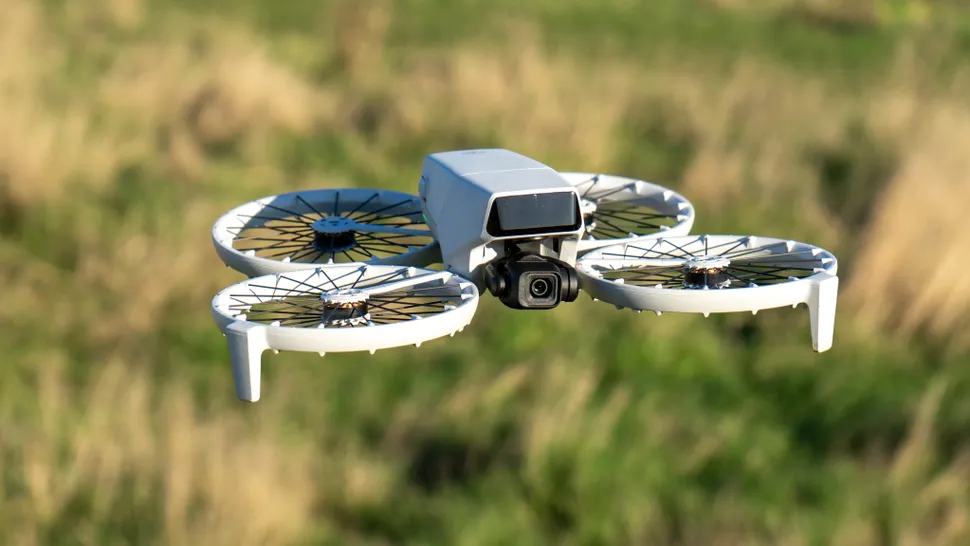
In a way, the drone design of DJI has been DJIs efforts in 2016, but this, for almost a decade, is a significantly new direction. The light and fragile looking circle-shaped propellor guards might give an impression of a little awkwardness, but they serve as a clever rugged folding design which is very easily pocketable, and seems to bring very little by way of flight time – it’s still around half an hour.
Not being thrilling to most people, safety nonetheless opens the way for hand-launching to become the usual practice. DJI has used this chance to fill the drone with AI tracking features that mean you don’t really need a remote control for it to find you and follow you – thus, this can be considered as a ‘selfie drone’.
Anyway, there is a remote controller in the package. You can either have the plug-your-phone-in type or a built-in screen depending on your preference, but in any case, DJI are not giving you a chance to buy this powerful drone without the option of flying it ‘properly’ (should I say ‘traditionally’) and making full use of the camera.
Besides that, for instance, a 3-axis gimbal for the camera which appeared to be able to follow the drone’s movements (some parts were windy), the drone also got some nice modern features, such as some onboard storage (2GB there in case you forget your memory card).
As far as criticisms are concerned, I am of the opinion that the noise from the enclosed props is slightly louder than the alternative (or that the pitch is more annoying), but this is such a small issue that it being solved by the convenience of hand-launching anywhere without the need to worry about fingers. It really is so simple that my 8-year-old had no problem with it, thus I understand why DJI considers it as a vlogging drone for everyone.
| Category | Details |
|---|---|
| Features | Camera capable of 4K @ 100fps, AI tracking option, and RAW image capture |
| Design | Unique “ugly duckling” look; different but revolutionary, convenient, and powerful |
| Performance | Camera performance on par with other DJI drones; slightly less stable in gusty wind due to lightweight frame |
| Value | Offers better video and RAW images than entry-level DJI Mini 4K; AI tracking enhances the value proposition |
5. DJI Mavic 4 Pro (Best premium drone)
With 100MP main camera it’s the most powerful folding drone money can buy
| Category | Details |
|---|---|
| Specifications | Weight: 1,063 g (2.34 pounds)Dimensions (folded): 258 × 125 × 107 mmDimensions (unfolded): 329 × 391 × 107 mmController: YesVideo resolution: 6K HDR @ 60fpsCamera resolution: 100MP + 48MP + 50MPBattery life: 51 minutesMax range: 30 km / 16 miles (theory: 41 km / 25 miles)Max speed: 90 kph / 55 mph |
| Reasons to Buy | + Triple camera system for zoom and wide+ Main camera has a Micro Four Thirds sensor+ Excellent 60fps live video feedback |
| Reasons to Avoid | – Average-looking telephoto– ProRes video recorded onto unswappable memory |
| Buy It If | ✔ You want triple-camera power for professional options ✔ You want all flagship DJI features: collision sensors, subject tracking, mission planning |
| Don’t Buy It If | ❌ You only need a single MFT camera (Mavic 3 Classic is cheaper) ❌ You don’t need survey-level zoom (Air 3S mid-tele zoom may suffice) |
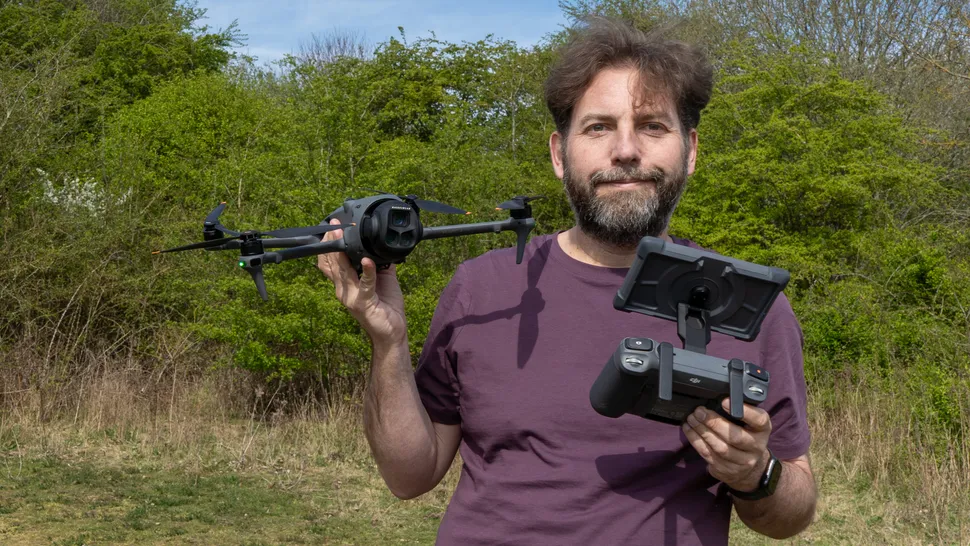
It is hard to belive that it took nearly two years for DJI to release something new and that is why Mavic 4 Pro has quite a long way moved the flagship drone. The two main chages are 100MP camera and the new ‘tennis ball’ gimbal.
The ball as well as adding the feature of the gimbal to rotate through 90 degrees like the Mini pro, can capture a ‘Dutch Angle'(any side-ways angle) and keep rotating if the drone keeps flying. It even can do the gimbal pointing down. Generally, most of the time it might not be of much use to you, however, if you happen to need it for something creative, it is nice because you get to keep the full original optical resolution.
The drone has gone through a ladder of generational improvements in range, subject tracking, and collision avoidance systems all of which have significant impact on the user’s experience. When I had the drone fly, it was able to track a moving subject, avoid trees that were blowing in the wind, and keep the camera on the subject, and I was the one controlling it only.
At that moment the camera was also recording 6K video at 60fps, and that is something worth admiring. All the necessary processing power is available. The drone comes in two variants- 64GB and 512GB versions (referring to the built-in memory). By choosing the 512GB, the drone can also record video with all keyframe (ALL-I). This is faster to work with when editing as less processing is needed, and the quality is higher because less is compressed (1200Mbps v 180Mbps with the standard) .
The even better aperture (that goes from f/2 to f/11) will do that if you are at the right angle with the sun. The mid tele is more or less identical with that of the Mavic 3 Pro, while the long tele has a wider aperture and larger sensor.
| Category | Details |
|---|---|
| Features | Triple cameras with ability to shoot almost uncompressed video, especially with 512GB version |
| Design | Improved look, practical features like fast charging; best design yet |
| Performance | Excellent video and stills across cameras; great subject tracking; minor software updates desired |
| Value | Excellent value compared to Inspire 3 considering main camera quality, though still expensive |
6. Antigravity A1 (Best drone for creative control)
World’s first drone with 360 camera pulls off precise FPV control with aplomb
| Category | Details |
|---|---|
| Specifications | Weight: 249 gDimensions (folded): 141 × 96 × 81 mmDimensions (unfolded): 308 × 382 × 89 mmVideo resolution: 8K @ 30fps (360°)Camera resolution: Lite: 50MP / Lite+: 20MPBattery life: 24 minutesMax range: 8 miles / 13 km (claimed)Max speed: 16 m/s / 35.8 mph |
| Reasons to Buy | + 5.4K video+ Adjustable aperture+ Night mode |
| Reasons to Avoid | – Props can get in shot when flying fast– Plasticky controller– Subject tracking could be better |
| Buy It If | ✔ You want a 360° camera: shoot first, frame later; creative effects ✔ You want FPV flight with smooth control using Antigravity’s Grip controller |
| Don’t Buy It If | ❌ You need cheap aerial footage (FPV gear adds cost) ❌ You want telephoto or very sharp stills (360° cropping limits quality) |
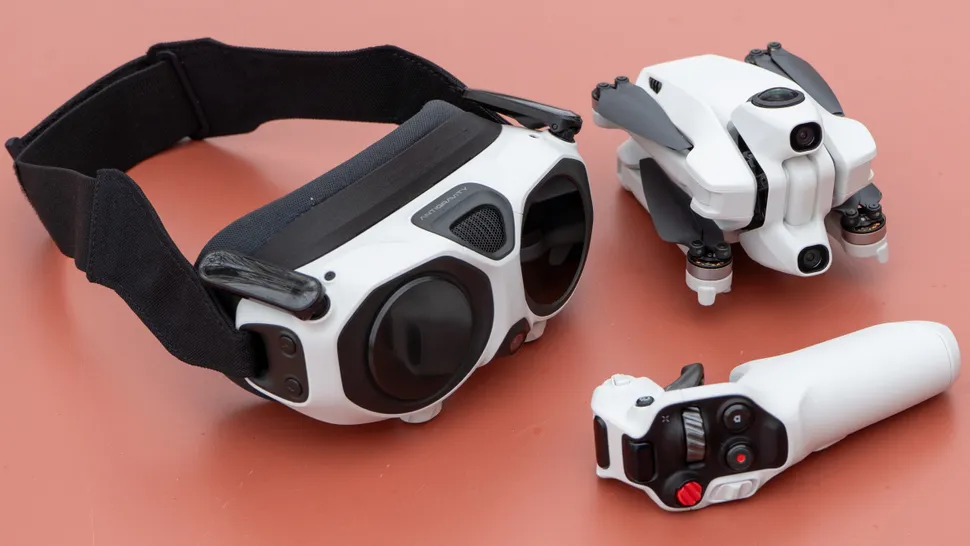
This drone is a one-of-a-kind idea in the drone world – at the very least at launch – and, by the way, a stunning execution of it, quite fortunate for those who have been anxiously waiting for it.
Antigravity is the name of the game when it comes to Insta360, the company which is among others behind the X5 and X4 Air cameras that have been at the top of our best 360 camera guide not only because of the great tech and, importantly, software which (it won’t be a surprise to you) is also what you get access to via this drone. The main point is that the camera can be carried through the air.
However, what shocked most people in the industry was the fact that the product is also a very neat and simple one for consumers. It is under 250g so almost anyone can fly it with very little paperwork. And flying is flawless due to a Grip controller and FPV goggles which are not only easy to operate (I assure you they are more to be seen than to be used) but which also come with navigational tutorials and tool tips.
The build quality is decent, and small design decisions are thoughtful all the way, for example, from features such as the powered retracting legs to save the lens to the folding arms that don’t have to be opened and closed in order. The quality of the accessories is good too, like the charging hub with an actual percentage readout of battery charge instead of just 4 lights.
In the end, this drone is clever in that it allows you to control the flight of the FPV with great precision and, at the same time, gives you the freedom to decide where to re-direct the camera using the Insta360 Studio app with great precision.
| Category | Details |
|---|---|
| Features | FPV flight, waypoint missions, feature-packed goggles; highly flexible system |
| Design | Clever, lightweight design that feels premium and stylish; very few complaints |
| Performance | Good flight performance; minor quibbles with range, speed, and resolution |
| Value | Excellent value if you understand what you’re buying; brings joy even if not strictly necessary |
7. Potensic Atom (Best budget drone)
A cheap ultralight drone that still packs a stable 4K camera
| Category | Details |
|---|---|
| Specifications | Weight: 240 gDimensions (folded): 88 × 143 × 58 mmDimensions (unfolded): 300 × 242 × 58 mmController: RF + PhoneVideo resolution: 4K @ 30fpsCamera resolution: 12MPBattery life: 32 minutesMax range: 6 km / 3.7 milesMax speed: 57.7 kph / 36 mph |
| Reasons to Buy | + 3-axis gimbal-stabilized camera+ Level 5 wind resistance+ Subject tracking and waypoints+ 4K video |
| Reasons to Avoid | – DJI Mini 4K has slightly better video quality |
| Buy It If | ✔ You want 4K stable video on a budget ✔ You want lots of features similar to mid/high-range drones at entry-level price |
| Don’t Buy It If | ❌ You want an established pro brand (Potensic is more consumer-focused) ❌ You want to use ND filters (not supported) |
Potensic has been a drone maker for quite some time, but until recently, they have not been really a concern for the market leaders. Apparently, the company was focusing on releasing products for the family fun/toy market until the release of the Atom. But, the Atom truly made me wonder when I got my hands on it.
When I first looked inside the very classy box, I was greeted with the drone whose hardware and aesthetics seemed to be greatly influenced by DJI Mini 2 (and all the drones DJI have made using that airframe, such as the current Mini 4K) seem to be.
Therefore, with DJI not changing airframes in this category (but coming up with the DJI Neo), the Atom actually gave itself a lead by coming at a time when DJI hadn’t decided to provide 4K video in their cheapest drone. Consequently, the Mini 4K has just been released (maybe because of this Potensic). However, DJI still have a relatively limited feature set on their entry-level drone. For instance, there is no possibility for waypoint mission planning, thus, a geekier mindset might think that Potensic has more to offer.
DJI, in my opinion, are concerned that some people may misuse this technology and as a bigger brand that is facing a lot of legal challenges, they take a cautious approach towards the features that they allow to be widely accessible.
The Atom does not come with such constraints, and it also sports a pretty smart controller design. A phone is held by an extendable body design – even my iPhone Pro Max with a case, the output when working looks a little like a Nintendo Switch. The software is nice, and the drone’s power cells can be replenished either through separate USB-C ports or (if you have a Fly More Kit) by means of a charging hub.
It seems that Potensic has put into the Atom everything they have learned, taken a good look at the competition, and fortunately moved upmarket without accompanying the move with a huge price increase. That’s quite a tempting decision. Based on this, I don’t think that Potensic will remain an economy brand for very long.
| Category | Details |
|---|---|
| Features | 4K camera, extensive app features including subject tracking |
| Design | Folding airframe, clever controller, decent app |
| Performance | Sharp video, effective 3-axis gimbal |
| Value | Great prices, especially in the Fly More kit |
8. DJI Inspire 3 (Best drone for cinema)
Most powerful money-no-object drone
| Category | Details |
|---|---|
| Specifications | Weight: approx. 4 kg (depending on lens)Dimensions (folded): 176 × 710 × 501 mmDimensions (unfolded): Width 695 mm (gear up)Controller: Up to 3 controllers including focus operatorVideo resolution: 8,192 × 4,320 px / 8K @ 75fpsCamera resolution: 8,192 × 5,456 px (44.6 MP)Battery life: 28 minutes (2 × 4,280 mAh)Max range: 15 km / 8 milesMax speed: 94 kph / 58 mph |
| Reasons to Buy | + 8K cinema-grade camera+ Option for separate camera operator+ Precise RTK repeatable routes |
| Reasons to Avoid | – Costly |
| Buy It If | ✔ You want interchangeable lenses and high-end cinema features ✔ You need reliable broadcast-quality output; established Inspire series |
| Don’t Buy It If | ❌ You just need good video (Mavic 3 may suffice) ❌ You work alone regularly (best with a crew) |
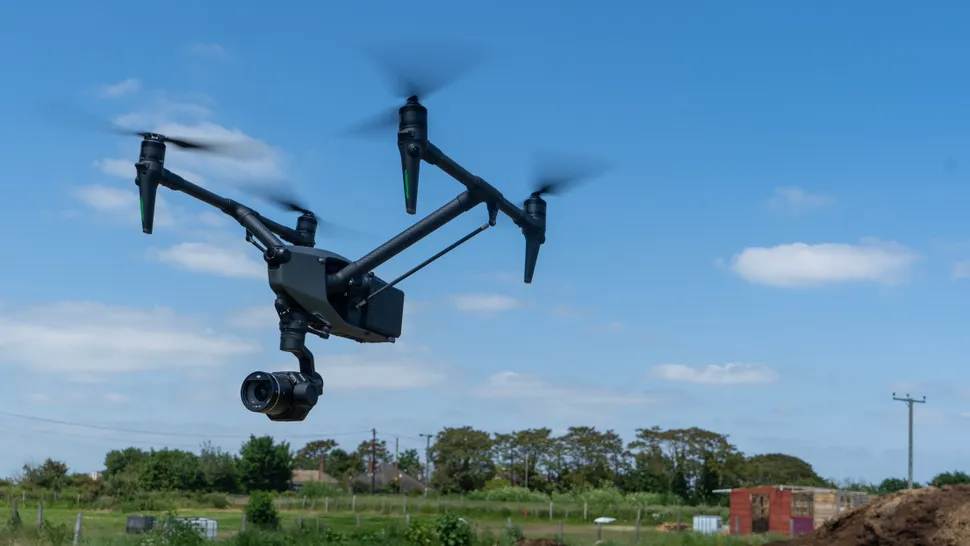
The Inspire 3 along with all the necessary accessories will cost you almost as much as a small car, but for the cinematographers it is meant for, it will definitely be worth the money. It might even be able to save a little bit compared to jibs and dollys, although it has a bit more downdraft! The accuracy of the repeatable routes can be up to a few centimeters thanks to the built-in RTK compatibility.
What about the cameras? The detachable unit is called the Zenmuse X9-8K Air camera. Maybe more later? The camera can be rotated 360 degrees below the drone’s body and can be operated by one pilot only – if they also use AI subject framing – or by a pilot and one or two camera operators.
This is top-tier professional gear, which will only be recording on DJI’s own expensive SSD cards (the ones used with its Ronin cinema cameras). Editing will mean a lot of number crunching, but the output will be stunning, and the dual-native ISO full-frame imaging sensor is definitely delivering what you’d expect for such an investment.
| Category | Details |
|---|---|
| Features | Interchangeable lens, optional RTK positioning |
| Design | Gorgeous, though delicate in places |
| Performance | Fast and powerful; battery life could be better |
| Value | Very expensive, though production costs lower than many professional setups despite dual batteries |
9. DJI Mini 4K (Best cheap DJI drone)
Finally, DJI’s low-cost drone has no significant compromises
| Category | Details |
|---|---|
| Specifications | Weight: 249 gDimensions (folded): 180 × 97 × 84 mmDimensions (unfolded): 159 × 203 × 56 mmController: YesVideo resolution: 4K @ 30fps, 1080p @ 60fpsCamera resolution: 12MPBattery life: 30 minutesMax range: 10 km / 2.17 milesMax speed: 72 kph / 44.7 mph |
| Reasons to Buy | + Side-steps registration fees+ GPS and Altitude Hold+ Shoots RAW as well as JPEG stills+ Some subject-tracking features |
| Reasons to Avoid | – Camera could have better dynamic range– No forward collision sensors– Lacks ability to program waypoints |
| Buy It If | ✔ You want social media clips: automatic selfies, QuickShots ✔ You want to fly outdoors: can handle Level 5 winds |
| Don’t Buy It If | ❌ You want pro features: OS is paired down, some compromises ❌ You need collision sensors (sensors are only vents) |
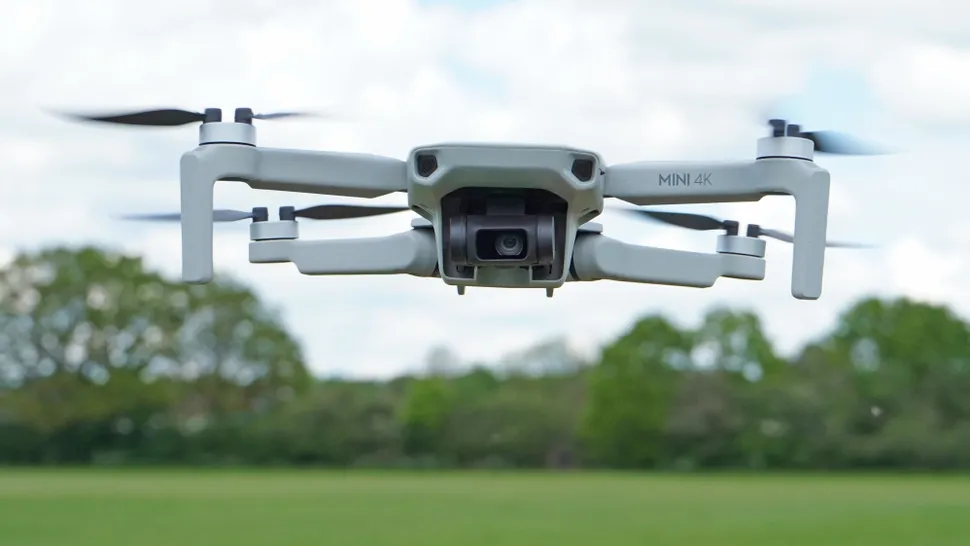
The DJI Mini 4K is basically the first affordable ‘normal’ drone in the range that the DJI Mini 2 was replaced (DJI Neo is a completely different story!). To compare its specs with a mid-range phone would be quite accurate; decent, but not excellent. However, that is a very high standard nowadays, at least, far above toy drones with their unstable video, because this drone can be very stable due to its onboard sensors and it has a 3-axis mechanical stabilizer for its camera.
One of the biggest criticisms of DJI’s previously cheapest model was that it recorded low-resolution videos. But the time of 2.7K is behind us – 4K camera is available. Or in other words better processing is connected to the same sensor so you can get the standard of the video that is now expected.
Similar to other ‘Mini’ drones, this one barely manages to escape the 250g registration limit and features a folding design with propellers that unfold for use. Therefore, it can be easily carried and relatively safe. As for software, the app is user-friendly and features auto land, return to home, as well as some cool orbiting effects that will definitely attract likes. It also provides a simple tutorial in the app.
By the way, while there is a remote control (and a nicely made one that will keep your phone charged), you will still require a phone – Android or Apple. The reason is that it acts as a display. Video & photos are kept on a MicroSD card from where you can directly transfer them to a computer – that’s how I do it – but there is also the option of Wi-Fi, though not very fast.
Quite a lot of changes have been made to the inner parts of the Mini SE, Mini 2 SE and the (non-budget) Mini 2, which all basically had the same airframe, but the drones’ frame has a lot of history – It is simple and reliable, with nearly half an hour of useable flight time.
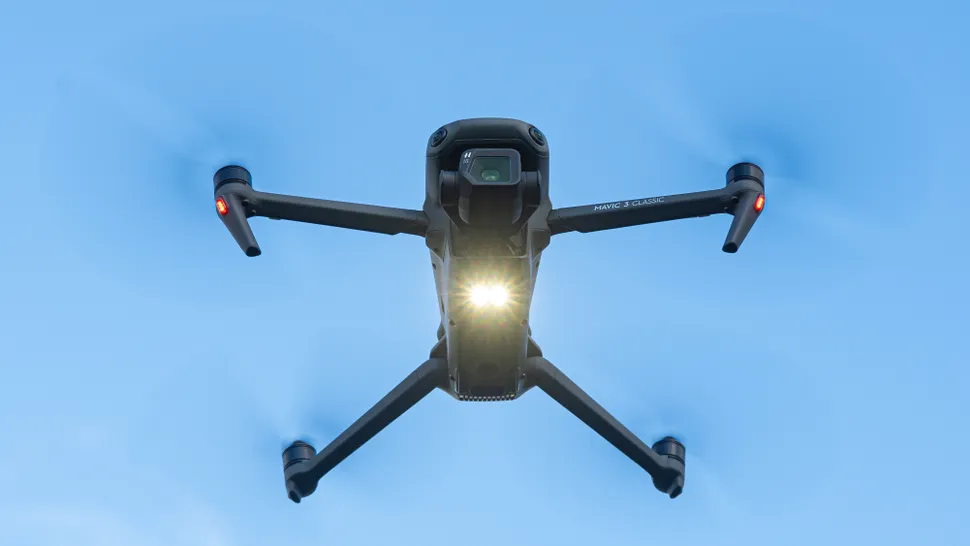
10. DJI Mavic 3 Classic (Best drone for photographers)
Get a Mavic 3 for less (if you can do without the zoom)
| Category | Details |
|---|---|
| Specifications | Weight: 895 gDimensions (folded): 221 × 96 × 90 mmDimensions (unfolded): 348 × 283 × 108 mmVideo resolution: 5.1K HDR @ 50fpsCamera resolution: 20MP (4/3 sensor)Battery life: 46 minutes (5,000 mAh)Max range: 15 km / 8 milesMax speed: 68 kph / 42.5 mph |
| Reasons to Buy | + 4/3 sensor camera+ Excellent 60fps live video feedback+ 5.1K video+ Stand-out battery life+ ARPS 5.0 subject tracking |
| Reasons to Avoid | – Misses out on hybrid camera zoom– 5.1K maxes out at 50fps |
| Buy It If | ✔ You don’t need tele lenses: get the best 4/3 folding camera at lowest investment ✔ You want DJI’s best software: full obstacle avoidance and subject tracking tools |
| Don’t Buy It If | ❌ You want to keep options open: Mavic 3 Pro has extra cameras for slightly more money ❌ You want a small drone: Mavic 3 is relatively large and registration is required |
The Mavic 3 is a beast of a machine and naturally, it costs a lot, however, its ‘hybrid zoom’ which can be quite a handy tool for surveying doesn’t seem like a feature that’ll attract many photographers. This Classic version removes the relatively low-resolution zoom camera and keeps the 4/3 Hasselblad camera on practically the same airframe (including C1 certification). 10-bit D-log and all the low-light advantages of the large sensor are still there.
Hence, creators who might have otherwise limited themselves to the 24mm EFL camera can now afford to get the Mavic 3 with its 15km range, return to home (avoiding and re-routing around objects) and great battery life for not much more than the cost of the camera alone. As a matter of fact, compared to the original launch, there are a few upsides – subject tracking, panoramic capture, and other features are all available from day one and at a pretty high level.
After the Classic was unveiled, the Mavic 3 Pro came into the picture, raising the bar and resolving some of the issues of the Mavic 3. On a personal note – I have flown all three and my answer would be that if it were possible, I would do my utmost to buy the version with all the cameras; it’s not that much of a price difference when you are already spending this much and wouldn’t it be better to have the options, right? (OK, so it is – the difference is more than the price of a DJI Mini 3, but you still need to be very sure that the wide is the only one you will use which, to be fair, is the case for most videomakers and surveyors. The decision is yours.
How to choose the best camera drone
GPS:
Toy drones generally do not have GPS features, but it is almost mandatory if you are making videos. The positioning technology was initially intended for guided missiles, thus it is perfect for drones. Although a missile is not involved, the goal is to be very close to the same spot, instead of being pushed by the wind. Beside the fact that driving is less complicated, it also makes possible a homecoming without pilot intervention in case the drone loses contact with the pilot, quite a handy backup.
Controller:
Indeed, the quality of the controller varies considerably from one model to another. The most of them have the twin sticks but at the lowest end they will employ a standard Wi-Fi with a control range of about 100m and video feedback if the line of sight is clear. Higher-end drones (everything on this list) use radio systems of their own (DJI only have names like Lightbridge, OM3, O3, O4 for them). The distance between the controllers is measured in miles, thus master & slave controller users (pilot & camera operator separately) and first-person-view goggles can be supported.
Camera & gimbal:
As with any camera, the size of the sensor and megapixels are important, but so are the methods employed for vibration reduction. At the bottom of the market, some form of cushioning or digital image stabilization is used, however, the best utilizes motorized gimbals to both neutralize the vibrations and level the camera 2- or 3-axis.
Battery:
One of the significant limitations of flying drones is the battery capacity. Larger capacities do not always result in longer flight times because the total weight (the battery included) as well as the efficiency are factors. Therefore, the much more convenient way to be is by simply stating the flight duration for each drone. The “Intelligent Batteries” are safer and come with built-in monitors so you can easily check their charge even if Lithium batteries store a lot of power. Drones are at their most efficient when flying forward at an average speed, so from the very beginning, you should consider the hover time of each drone to be a little less than the specified flight time. maneuvers consume more electricity as well.
The app:
The free application quality provided by the manufacturer is a very important factor of the overall user experience, as lots of features, especially those belonging to high-end drones, will require digging deep into menus to access them. Obviously, here is where the camera is taken beyond auto. Smart developers have also got around this limitation, by using drone sensors and the app’s processing capabilities to provide easier flying modes and cool visual effects such as DJI’s Tiny Planet selfie clip which is just one of the Quickshot options.
The bundle:
Many drones are sold as single items, or together with a controller, or with a kit consisting of propellers, batteries, ND filters, and a bag. Well, for spare propellers, it is rather unfortunate but you will probably be needing them pretty soon. Batteries are pricey and charging them can be quite a hassle if you have to walk a long way from your spot, thus, they ought to be a serious factor in the bundle’s total price. The thoughtfully designed bag can keep all these safe (even if you just throw it inside your favorite bag). Besides that, do not forget that you cannot just acquire ND filters for most drones – usually, the gimbals are the ones with unique lens mounts, so take it all into account.